Performance
Engineer compute, storage, fabric, power and cooling as one workload-led system.
 Request a briefing ↗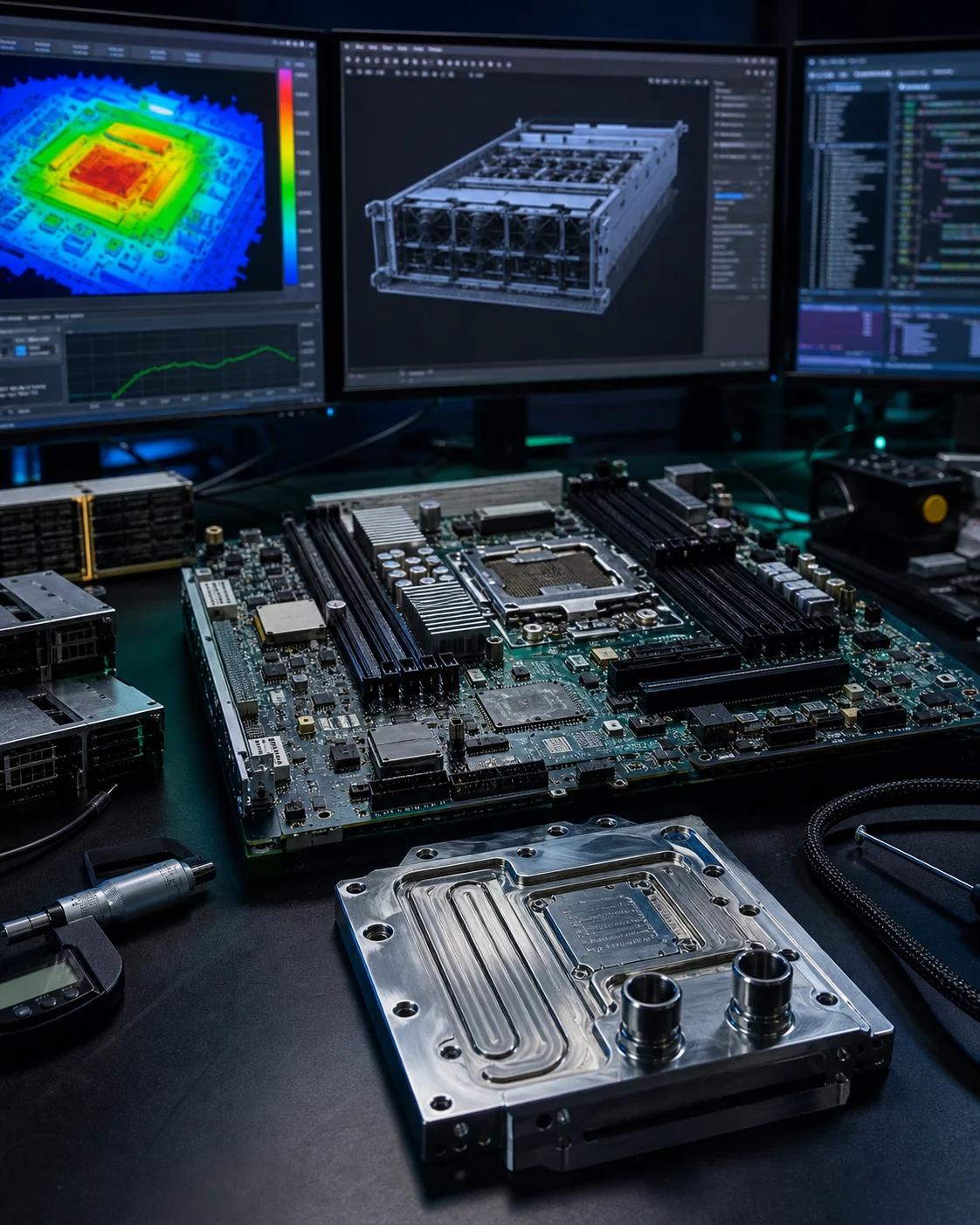
DESIGN, IP + R&D MADE IN ITALY
IUNOVRA combines hardware and thermal design, software development and AI research to improve how infrastructure is built and operated. Simulation, prototyping and testing turn promising ideas into validated designs and repeatable delivery methods.
THE STRATEGIC INTENT
The most valuable layer sits at the interfaces: workload-to-system design, thermal and power control, composability, orchestration, validation and the operating data that improves the next deployment.
Engineer compute, storage, fabric, power and cooling as one workload-led system.
Optimise liquid cooling, heat rejection, power conversion and operational control together.
Reuse validated modules from retrofit and rack scale through POD and distributed infrastructure.
Protect designs, software, know-how and validated delivery methods where the advantage compounds.
SOVEREIGN BY DESIGN. OPEN BY ARCHITECTURE.
Our focus is system architecture, thermal and deployment design, InfraMind software, operating logic and continuous R&D. Project agreements define ownership, licensing and rights to use each deliverable. Selected compute, cooling, power, storage and networking technologies are integrated through supported interfaces, with compatibility validated for each engagement.
For customers: control of infrastructure, data, permissions and operating policy—with hardware choice across supported integrations.
ENGINEERING + SOFTWARE DOMAINS
These are engineering and research domains, not a list of universally available features. Composable GPU pools, dynamic allocation and advanced optimisation require the relevant interfaces, prototypes and deployment-specific validation.
COMPOSABLE ACCELERATOR R&D
IUNOVRA is developing an architecture that separates accelerator capacity from fixed server configurations. The aim is to let supported hosts access a governed GPU pool—helping operators adapt capacity, improve utilisation and avoid unnecessary server expansion.
Explore accelerator resources as a composable infrastructure layer rather than a permanently fixed server component.
Provide supported hosts with governed access through validated hardware and software interfaces.
Connect future accelerator pools with AI POD infrastructure, data services and InfraMind operational intelligence.
INTENDED WORKLOAD FIT
Research targets include inference, media processing, scientific workloads and other parallel compute patterns.
ENGINEERING BOUNDARY
Strongly coupled training workloads may require different interconnect architectures and are not assumed to fit this model.
Architecture, interoperability and operating behaviour remain subject to prototype testing and deployment-specific validation.
SOFTWARE IP
Engineering and software development connect operational visibility to governed action. Each engagement distinguishes demonstrated functions, integrations requiring validation and development objectives. Predictive models, autonomous control and billing are separately scoped—not implied by a digital twin.
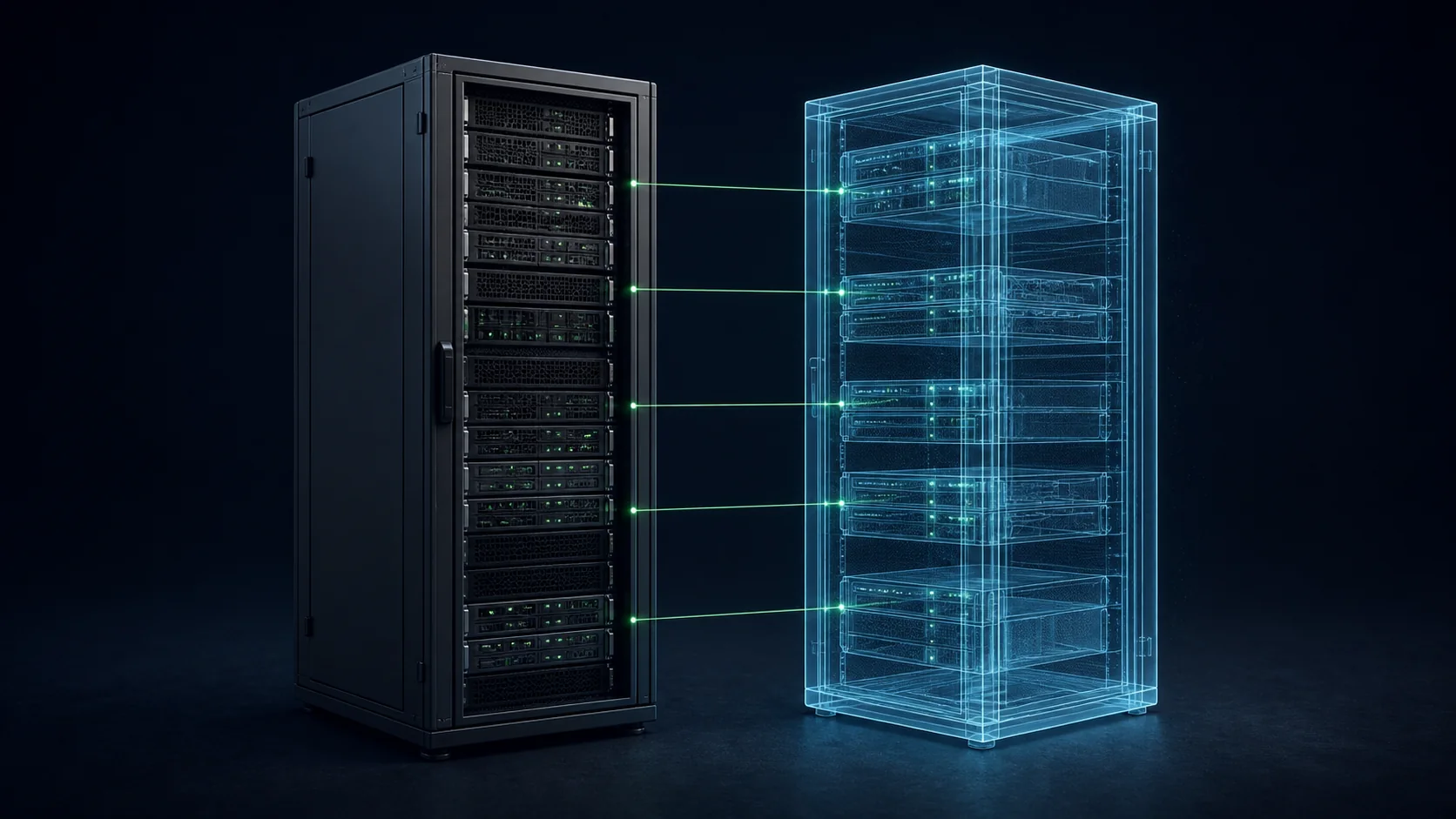
PHYSICAL INFRASTRUCTURE + DIGITAL CONTEXT
InfraMind connects resources, relationships and live state in one model, giving people and AI the context needed for governed action.
Connect supported resource controls, capacity context, policy and access. Dynamic allocation and composable resources are validated for the selected architecture.
An operational digital twin connects supported resources and their state. Monitoring and approved workflows provide the foundation; predictive analysis and optimisation require suitable data, models and deployment-specific validation.
Develop usage and energy measurement to support service economics. Pricing, SLA reporting and billing integrations require a separately agreed scope.
THE R&D SYSTEM
Operating constraints guide designs, simulations, prototypes and validation. The programme below describes our engineering approach; it is not a claim that every research domain is a completed or certified product.
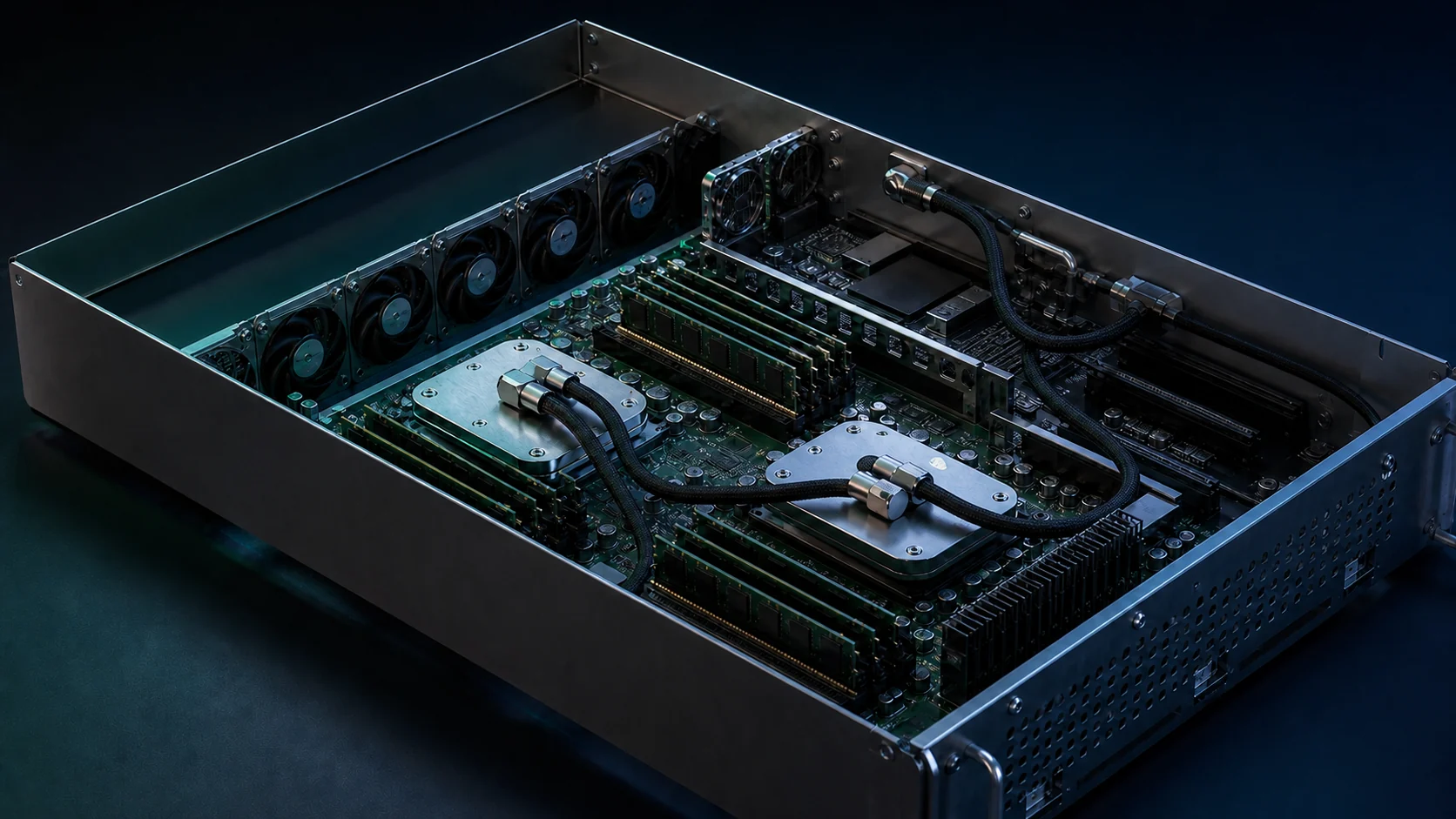
FROM DESIGN TO VALIDATION
Thermal designs become prototypes with measurable requirements. Validation connects simulation to performance, serviceability and real operating constraints.
Capture workload, thermal, power and operational constraints.
Model the architecture and test trade-offs before deployment.
Prove performance, reliability, efficiency and maintainability.
Secure relevant designs, software, know-how and industrial rights.
Convert learning into reference architectures and repeatable modules.
TANGIBLE ENGINEERING OUTPUTS
Each engagement selects its outputs and acceptance criteria. These are possible deliverables—not a claim that every item is already available.
Architecture, interfaces, component selection and operating limits for the workload and site.
Agreed simulations, prototypes, test plans and results against explicit performance and reliability requirements.
Supported functions, APIs, data flows, permissions and deployment requirements.
Validated design rules, documentation and handover material, with ownership and usage rights defined.
WHAT YOU RECEIVE
Technical descriptions include reference designs and configuration options. The proposal separates demonstrated functions, integrations to validate and development work; only the agreed scope is included. Performance and service commitments follow the acceptance criteria.
COLLABORATE ON THE NEXT ARCHITECTURE
Engage IUNOVRA on workload architecture, thermal and energy design, prototype validation, InfraMind integration or a joint R&D programme.